Bank aggregation: the solution that simplifies your financial management
Imène Lechkhab
Oct 24, 2024
Today, nearly half of consumers in France are multi-banked. Whether we have an account at a traditional bank like Caisse d’Épargne or Crédit Agricole, an online-only bank like BousoBank, and also our PayPal account… The multiplication of payment channels has accelerated over the past ten years, a consequence of the digitalization of our consumption patterns.
Companies are significantly more affected by multi-banking, making it essential to aggregate their various accounts into a single interface. Why? For better visibility of their finances and informed decision-making!
Fortunately, Fintech companies have rapidly developed to meet this growing need and offer increasingly advanced multi-banking management options.
What is bank aggregation?
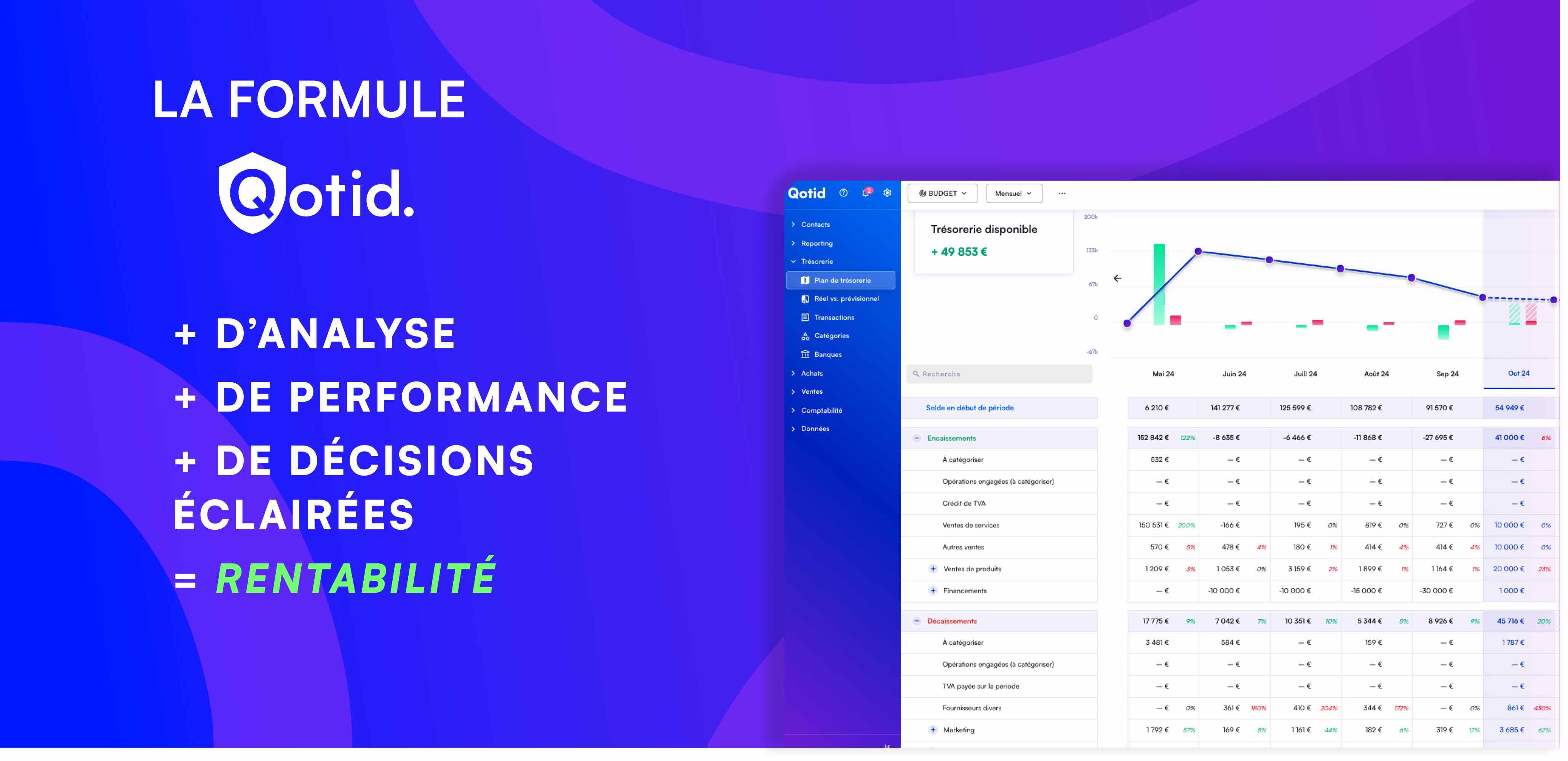
Bank aggregation consists of gathering data from multiple bank accounts within a single interface. With an aggregation solution, it becomes possible to access all of your financial flows at a glance, thus facilitating a better visibility of the company’s finances.
With the rise of open banking, implemented by the PSD2 (the European Payment Services Directive) that came into effect in 2018, the APIs of banks now allow financial management software like Qotid to provide an overview of your finances without having to log in to each bank separately.
The concept is similar to bank transfers, but it benefits from an additional layer of security: that of your approval via your device and authentication (biometric, FaceID, password…).
Who can be a bank account aggregator?
Bank aggregators are software or applications from Fintech, meaning companies specialized in financial management. Banks also offer bank aggregation services to meet the growing demand related to the multi-banking of their clients.
However, to be a bank aggregator, maximum protection of customers' banking data must be ensured. This service can only be provided if the company is certified by PSD2 and has been approved by ACPR, the Prudential Control and Resolution Authority. These strict regulations around open banking establish security in the transfer and sharing of banking data via an API.
What is PSD2?
PSD2 (Second Payment Services Directive), introduced in 2018, establishes regulations around online payments. It is responsible for strengthening security through strong authentication: hence the online purchases that redirect you to your bank's application and require multiple authentication steps! Although these steps at the time of purchase can be cumbersome, they are necessary for the security of your banking data.
But this need for security does not only concern online payments, as it also applies during the use of a bank aggregator. PSD2 also sets formal conditions for applications or bank account aggregation interfaces. Thus, it allows you to have a complete overview of your different bank accounts without worrying about the security of your banking data. Indeed, this data is encrypted through highly secure solutions like Powens and Bridge.
What is an API in bank aggregation?
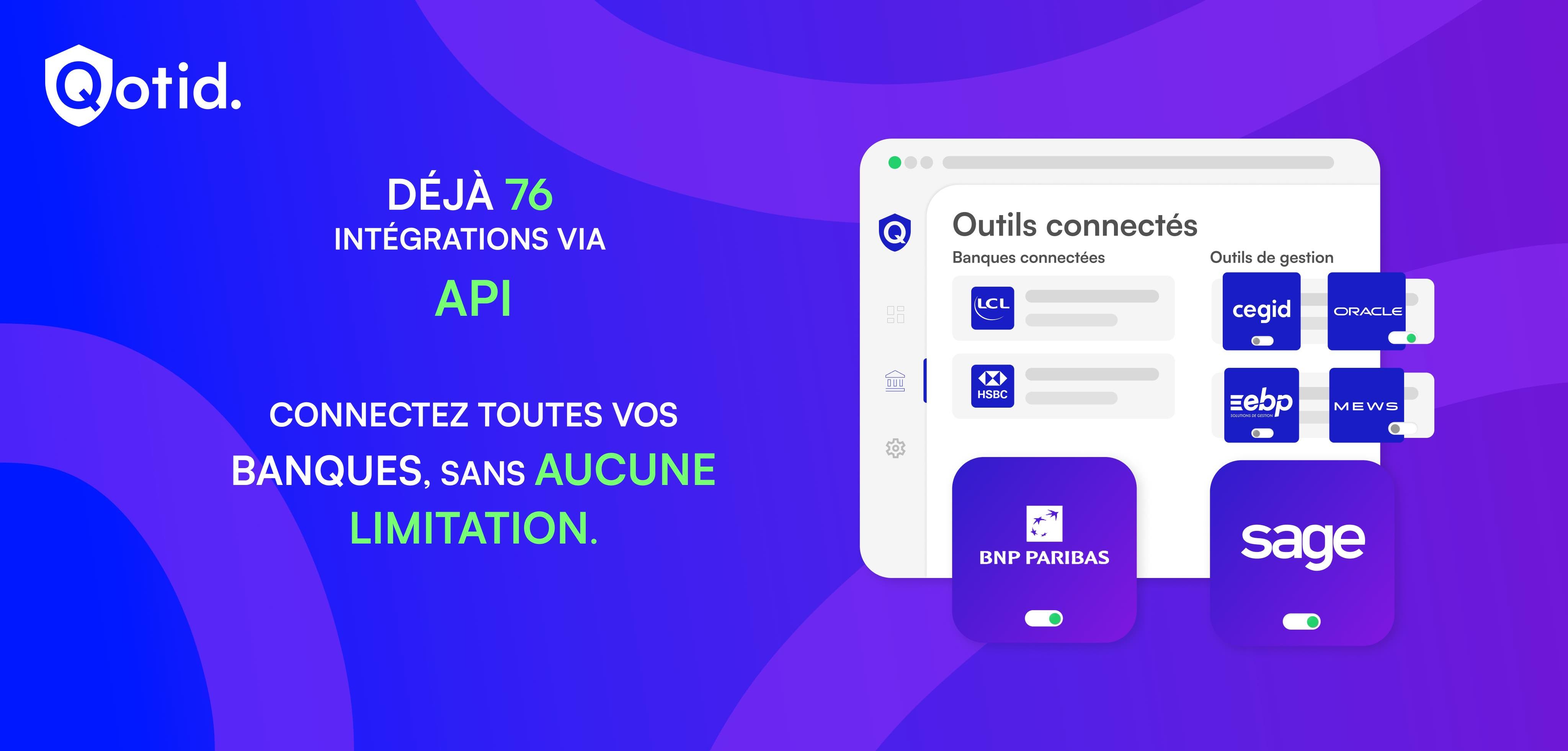
Widely used by financial management software, the API (application programming interface) is a sort of tunnel that permits the exchange of data between two interfaces. Let’s take the example of Qotid, which has nearly 76 API integrations. Each of these integrations allows sharing information with other software or platforms: whether it’s your accounting data with Pennylane, Sage, or even your hotel PMS, all your invoices are retrieved from these platforms to our software. You will then benefit from a complete overview of your deadlines without having to transfer everything manually.
What are the benefits of bank aggregation?
Bank aggregation offers numerous advantages to businesses and individuals:
Centralization of bank accounts: Access all your accounts through a single platform.
Simplified payments: Track your payments in real time without having to switch between multiple banking interfaces.
Increased visibility: In one glance, get a comprehensive view of your business finances, making decision-making and cash flow management easier.
Time savings: Automating banking monitoring tasks allows you to dedicate more time to higher value-added tasks.
Features of bank aggregators
Real-time synchronization of data from multiple banks
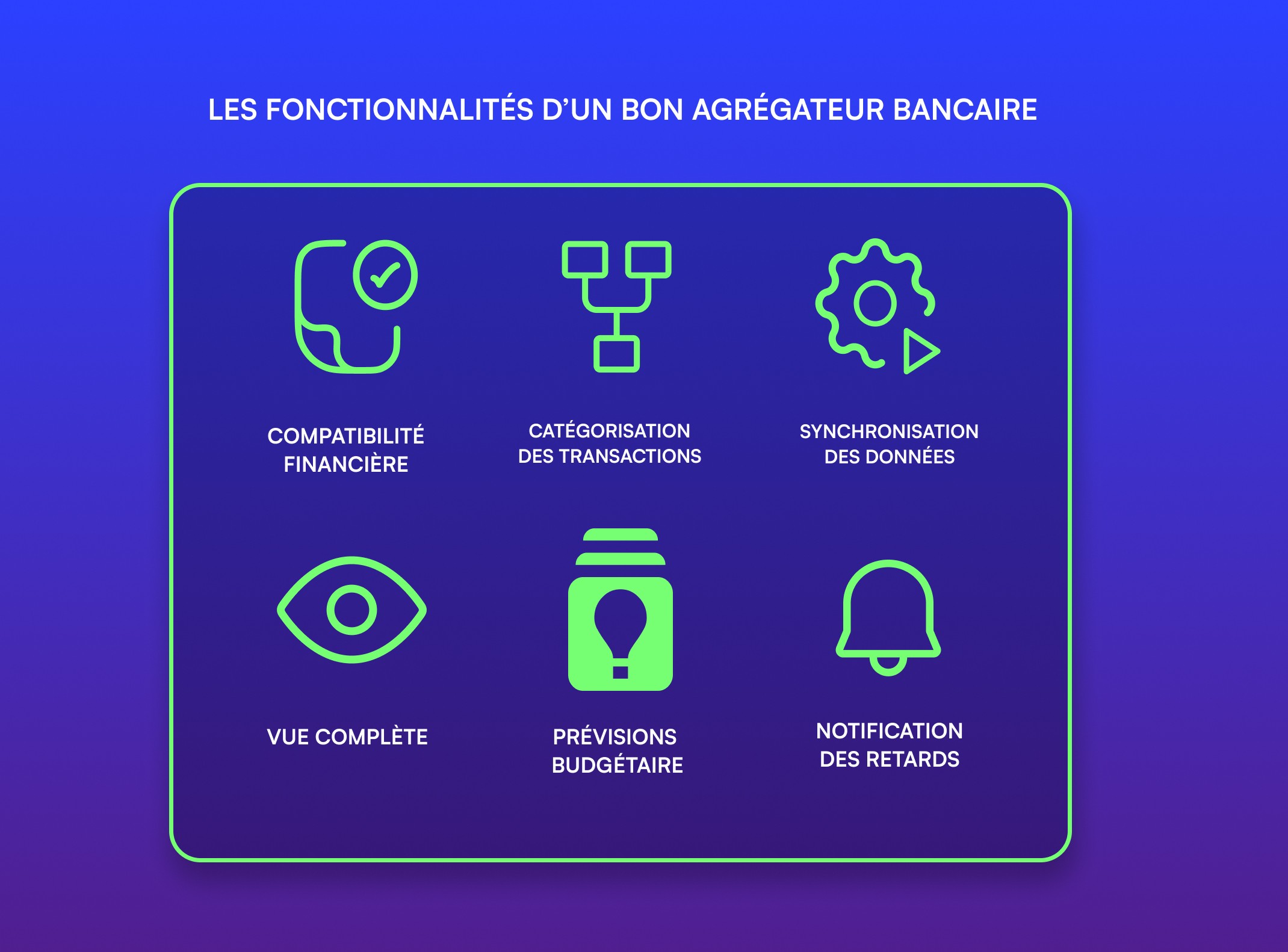
Real-time synchronization is one of the key features of a good bank aggregator. It allows for the instant collection and display of all transactions conducted across the various bank accounts associated with a business.
Thanks to the use of APIs (in accordance with the PSD2 directive), the aggregator can obtain a continuous flow of financial data, thus avoiding delays in information. This ensures immediate and accurate visibility into the company's cash flow, essential for quick and informed decision-making.
Compatibility with numerous financial institutions
A good aggregator must be capable of connecting to a wide range of banks and financial institutions, whether they are traditional banks or neobanks such as Boursobank.
The aggregator's ability to synchronize with multiple institutions is crucial to meet the needs of businesses in the age of multi-banking.
This compatibility offers maximum flexibility to businesses that work with different banking providers while consolidating financial data into a single and centralized dashboard. In addition to banks, treasury management software is multiplying integrations and also allows you to automatically transfer accounting data (quotes, invoices) and pay multiple bills with one click.
Categorizing transactions, defining category rules, and creating your own cash flow categories
The categorization of transactions is another pillar of effective bank aggregators. This feature allows you to organize cash inflows and outflows according to predefined categories (salaries, suppliers, overhead costs, etc.), while giving you the ability to define custom rules.
For example, a business may choose to automatically classify all invoices from a supplier under a specific category. Similarly, if the application has this feature, it can perform bookkeeping matching.
This facilitates expense analysis, improves budget management, and allows rapid identification of trends or anomalies. The addition of custom categories is particularly useful for businesses with specific needs or unique sectors of activity.
Visualize cash outflows, inflows, and cash balance
The visibility of cash outflows (outgoing payments), inflows (incoming revenues), and the cash balance is crucial for any business.
An effective aggregator should allow for simple and graphical visualization of these elements, in real-time through an dashboard, which helps to anticipate periods of financial strain or to take advantage of liquidity surpluses for investment.
This instant view of financial flows also allows for detecting discrepancies between forecasts and actual movements, to proactively adjust financial strategies.
Also read : The best treasury management software
Budget forecasts
Budget forecasts represent an advanced but essential feature for proactive management of business finances.
A good bank aggregator should be able to predict upcoming cash flows based on past transactions, recurring payments, and available information on future inflows and outflows.
These forecasts are crucial for planning liquidity needs, identifying periods when the company may face cash shortages, and implementing adjustment strategies (such as negotiating payment terms or seeking financing). The budget forecasting feature also helps to compare actual results with the company’s financial goals.
Visualize deadlines to quickly address payment delays
Adhering to payment deadlines is crucial to maintain good business relationships and avoid financial penalties.
Your bank aggregator should allow tracking upcoming deadlines, both for outgoing payments and expected inflows. By quickly identifying payment delays, the company can take necessary measures to avoid cash flow incidents or late fees. This feature also contributes to optimized management of receivables and debts, ensuring that the company honors its financial commitments while avoiding leaving money on the table.
These features are essential for any business looking to improve its financial management. They optimize the monitoring of financial flows, prevent liquidity problems, and facilitate informed decisions based on real-time updated data.
Who is affected by bank account aggregation?
It is, of course, essential needs for businesses like SMEs and large groups. If it is a multi-site business such as a restaurant or hospitality chain, it is absolutely necessary to use a bank account aggregator with advanced features.
For individuals, a Square study reveals that 42% of banking clients are multi-banked. Certainly, users of online banks in addition to a traditional bank are increasingly numerous, especially in the 18 - 35 age bracket. This phenomenon is becoming widespread with the digitalization of payments. Well-known bank aggregators like Bankin’ are very useful for promoting general financial education.
As for self-employed individuals or freelancers, although they must juggle between their personal and professional bank accounts, their needs remain somewhat limited. It all depends, of course, on the potential of the company's project.
If you are launching into a large production chain (textile industry, multi-site restaurant, and hospitality, etc.), having financial planning functionality is a very good choice.
FAQ
1. Can I initiate payments from the aggregator?
Some bank aggregators possess payment functionalities, particularly financial management software. For an SME or large company, it can be very interesting to initiate payments from their aggregator to streamline transactions. With software like that of Qotid, you can pay multiple invoices with one click and visualize your payment deadlines thanks to the aging balance feature. You will no longer have to worry about forgetfulness or payment delays.
2. How is banking data protected?
Since 2018, open banking is subject to the security standards of PSD2, using strong authentication mechanisms and secure APIs to protect your data.
3. How does an aggregator's API work?
The API allows connection to banks or other management software and accessing your information securely, providing an overview of your finances.
4. Can investments (assets, stock market investments, cryptocurrencies, etc.) also be aggregated?
Yes, there are specialized applications for bank aggregation like Finary, which allow you to aggregate your real estate investments, assets, and even cryptocurrencies.